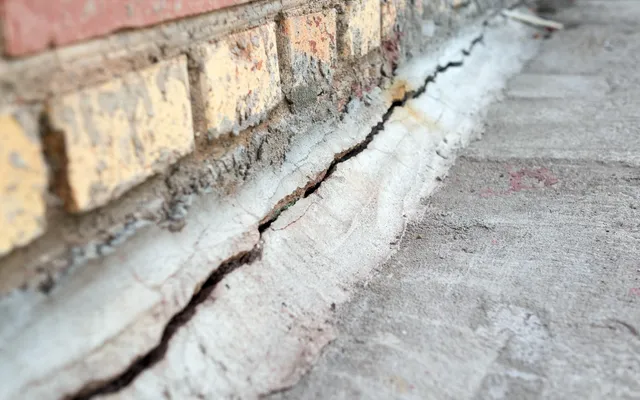
Common Foundation-Related Cracks
Different crack patterns can suggest different causes. Common cracks include:
- Stair-step cracks in brick or mortar
- Diagonal drywall cracks above doors or windows
- Horizontal or vertical cracks in visible foundation areas
- Cracks in tile or concrete floors
- Separation around windows, trim, or exterior joints
- Garage floor cracks near slab movement
- Cracks that return after patching
The pattern matters. A crack should be evaluated along with floor movement, door alignment, drainage, and the age of the home.
When Is a Foundation Crack Serious?
A crack may need professional attention if it is widening, appears suddenly, has displacement, follows a stair-step pattern through brick, or appears with other warning signs like sticking doors, uneven floors, or gaps around windows.
Crack repair alone may not solve the problem if the foundation is still moving. In many cases, the foundation should be stabilized first, then cracks can be repaired.
What Causes Foundation Cracks in Tyler Homes?
Foundation cracks can be caused by:
- Soil expansion and shrinkage
- Uneven settlement
- Poor drainage around the foundation
- Plumbing leaks
- Tree root moisture demand
- Slab movement
- Pier and beam support failure
- Seasonal moisture changes
The goal is to identify the cause before recommending repair.
How Foundation Cracks Are Repaired
The right approach depends on the crack and the cause behind it. Options may include:
- Monitoring small cosmetic cracks
- Sealing cracks after stabilization
- Slab or pier repair to stop movement
- Masonry repair after structural work
- Drainage improvements to reduce soil movement
- Crawlspace or support repair for pier and beam homes
If the crack is caused by active movement, patching the crack without stabilizing the foundation may only be temporary.